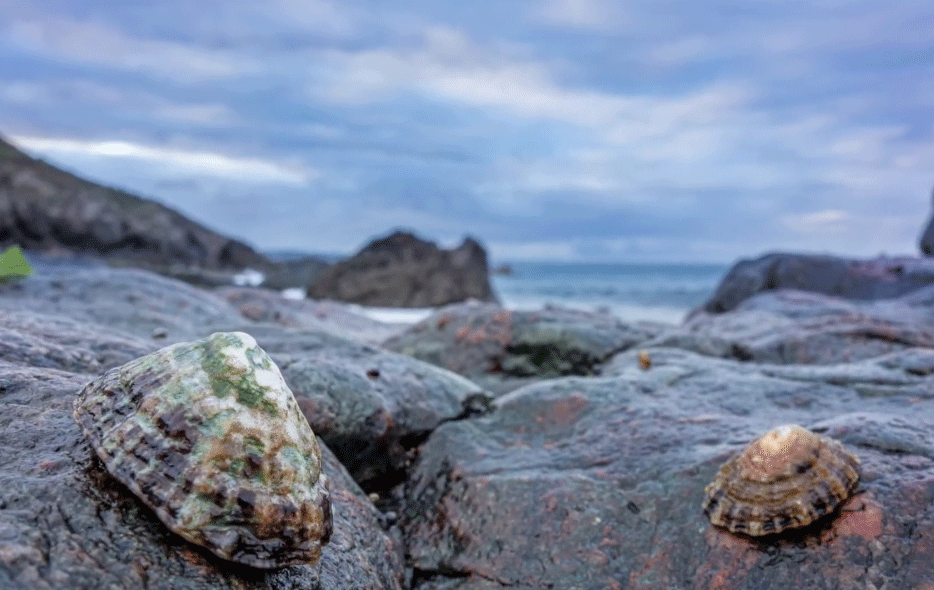
 Move Over, Spider-Man: The New King of Natural Strength- Meet the Common Limpet (Patella vulgata).
Limpet teeth have displaced spider silk as the strongest natural material in the world. For years, we’ve been told that spider silk is the gold standard of biological engineering. It’s the material that inspired comics and high-tech body armour. But it turns out, we were looking in the wrong place. The new record holder for the toughest biological material isn’t found in a web—it’s found on a rock at low tide.
The Secret is in the Smile
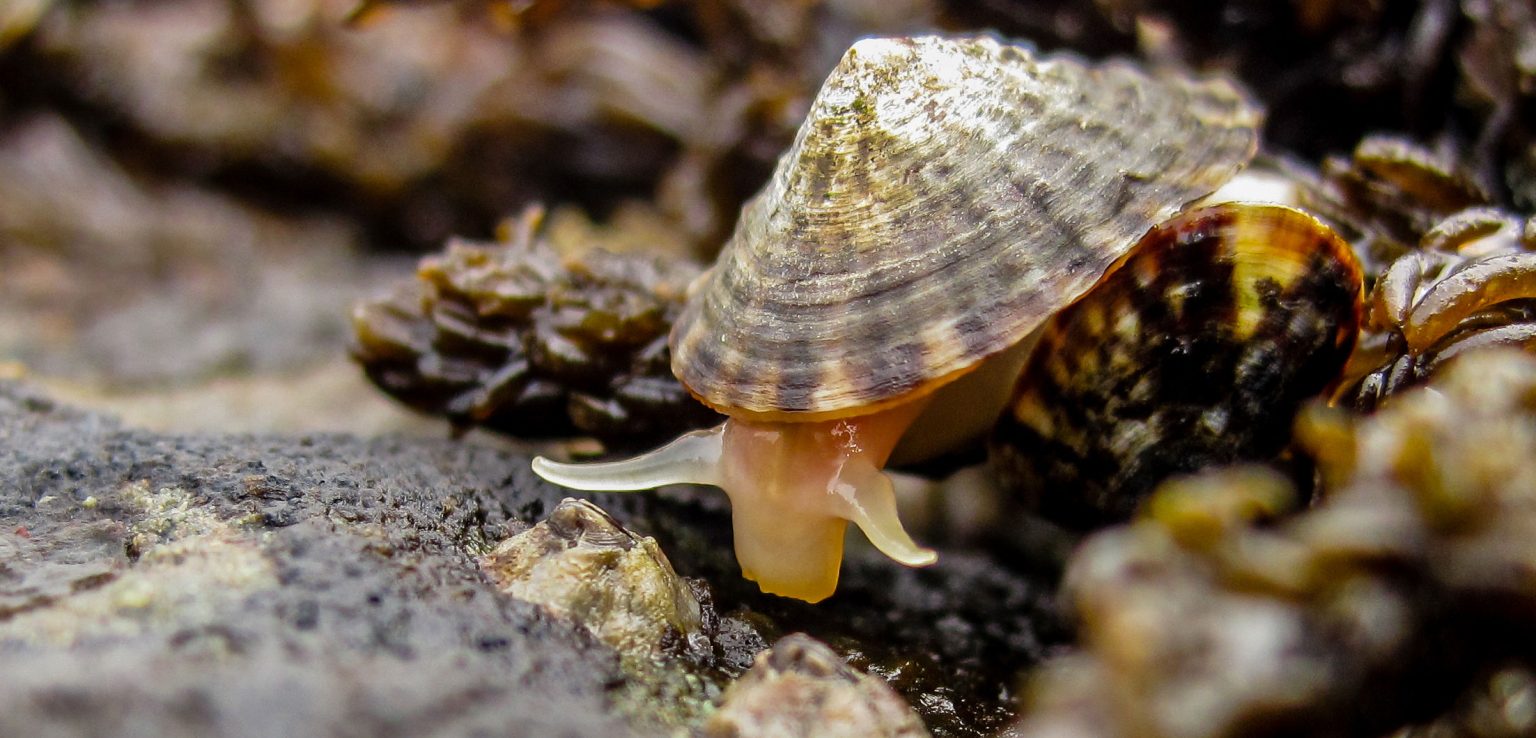
Limpets are small, aquatic snails that spend their days clinging to rocks. To eat, they use a tongue-like ribbon covered in tiny teeth to scrape away algae. Because they are essentially “eating” stone, their teeth have evolved to be incredibly durable.
Limpets have a tongue or ‘radula’ covered in tiny teeth that scrape away at the rock surface. Photograph: University of Portsmouth
Scientists at the University of Portsmouth have discovered that limpet teeth are the world’s strongest biological material, even surpassing spider silk. By analysing the teeth at an atomic level, researchers found that their secret lies in goethite—hard mineral fibres perfectly sized to create a resilient composite.
Unlike most materials, which become weaker as they get larger due to structural flaws, limpet teeth maintain their incredible strength regardless of size. This “bio-inspiration” could revolutionise high-performance engineering. Professor Asa Barber suggests that by mimicking this fibrous structure, we could develop significantly stronger and lighter materials for Formula 1 cars, boat hulls, and aircraft.
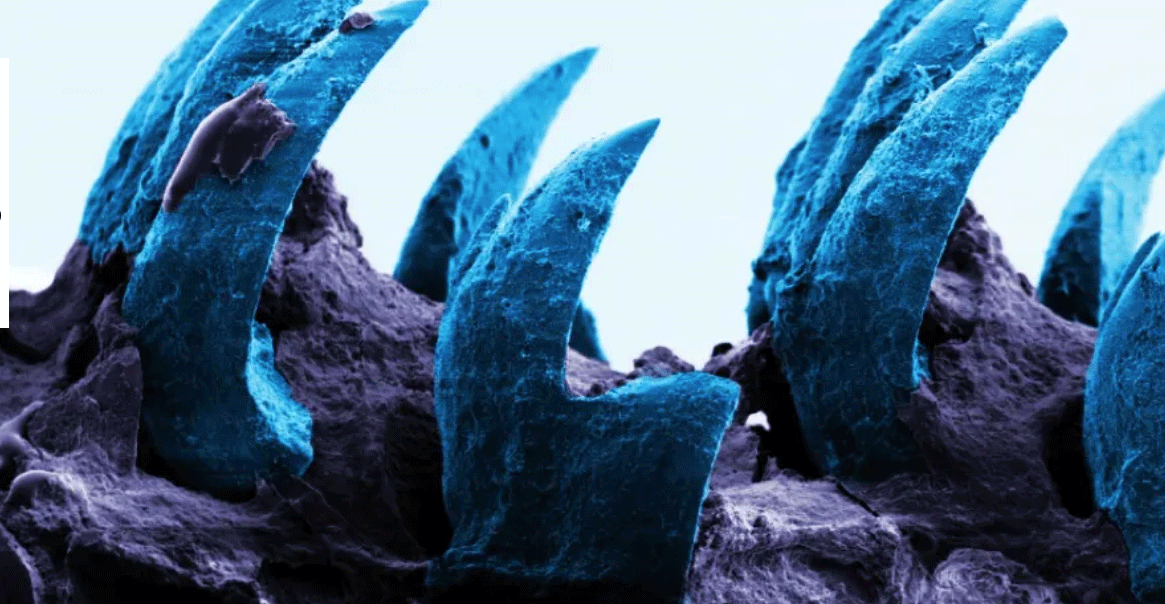
Macro photography of a limpet’s underside showing the radula, the tongue-like organ containing the strongest biological teeth in the animal kingdom.
Tiny as the teeth are—each one is as long as a strand of hair is thick—they’re the strongest biological material known to exist, according to a recent paper appearing in the Royal Society journal Interface. In fact, they’re 10 percent stronger than spider silk, the previous title-holder for strongest naturally occurring material.
The mighty teeth are critical to limpet survival. “If the teeth break very easily on the rock surface, that’s it—the limpet can’t feed, and it dies off,” says Asa Barber, an engineer at the University of Portsmouth in England and the lead author on the paper.
How Tough Are We Talking?
To put it simply: Limpet teeth are stronger than spider silk and rival the most advanced man-made carbon fibres. While spider silk is famous for its elasticity and strength, the limpet tooth excels in tensile strength—the ability to withstand being pulled or stretched without breaking.
Bottomline:
The title-holder for strongest biological material goes to a small mollusk.
Source: