
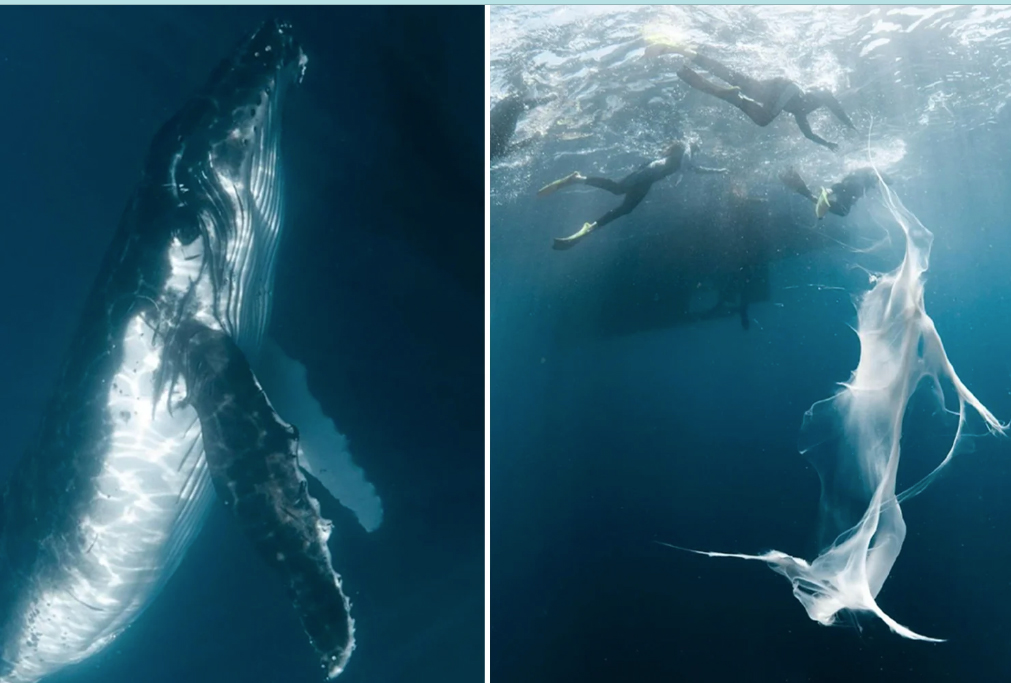
Whales are marine mammals, and like most mammals, they produce whale milk to feed their young. They also share many other traits with land mammals, including bearing offspring (whales have a gestation period similar that is very similar to that of pregnancy in humans), being warm-blooded, and having hair (some species are born with hair).
Shortly after birth, the mother whale feeds her child whale milk from her nipple since the young cannot hunt for their own food.
When the female whale lactates, the thickness of the whale’s milk can vary greatly. In fact, a 35% – 50% fat concentration is common among many species of whales as the higher fat percentage allows the whale’s milk to travel through the water without breaking up. The thick milk is often referred to as having a toothpaste-like consistency.
This is very important because, for the adult female whale to feed her baby, she must either shoot the milk into her baby’s mouth through the water or allow the child to suckle the milk from her nipple. If the fat consistency is too low, then the mother’s milk would dissolve in the water, making it difficult for the baby whale to feed and receive adequate nutrients. The fatty milk also provides the baby with lots of nutrients and energy to help the baby grow into a healthy young adult.
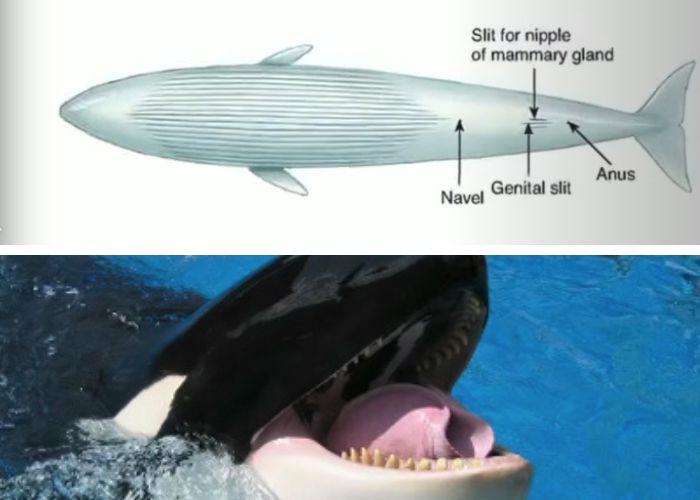
Like any mammal females whales nurse their young with two mammary glands located in a slit near their tail. Stimulated by the pressure from the nursing baby who sticks its little face partially into the slit, the mama begins to eject the milk into the baby’s mouth, kind of like a giant gas pump.
The baby whale rolls its little tongue into a taco to help filter that milk down its throat. This milk is thick and fatty, with a consistency like toothpaste. Whale milk is about 53% fat. In blue whales, the baby can grow up to 10 pounds in an hour.
To maximise the baby’s milk transfer, some children may use their tongue to create a tight seal around the mother’s nipple. A few whale species (such as the blue whale) may drink more than 150 gallons of milk per day and can easily gain 100 pounds or more each day in their first few months of birth, primarily from drinking their mother’s milk. Baby whales can often consume anywhere from 2% to 10% of their weight in milk daily.
In terms of how long a baby whale may feed on its mother’s milk, the length of nursing can vary greatly, lasting anywhere from 6 months to 2 years, depending on the whale species.
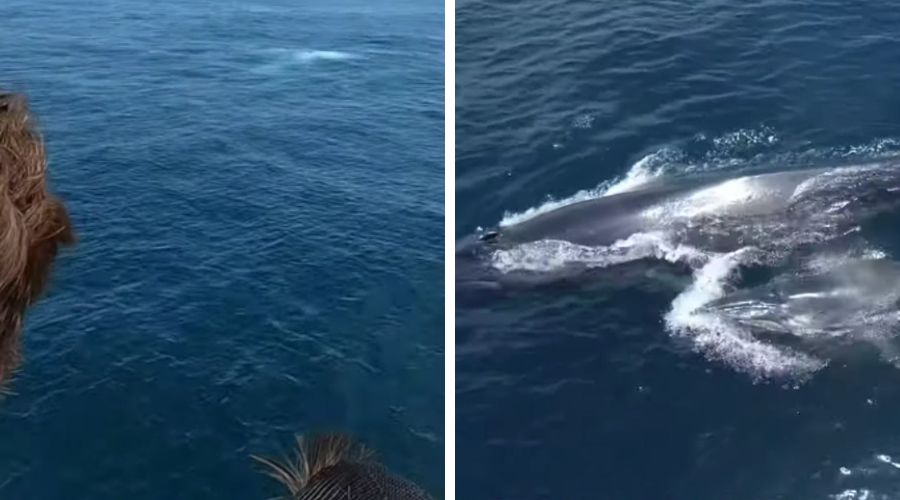
A rare sighting taken from a whale watching boat was a mother and baby Bryde’s Whale nursing. Notice the cloud of milk seen here floating on the surface. Not captured on film was the baby Bryde’s whale, which began feeding on the excess milk in the water by skimming the surface and using its tiny baleen to filter the thick milk. What a rare and special encounter!
Birth, nursing, and relationships
Females may mate with several males during a single season and will typically produce a single offspring (twins are very rare) once every 1 – 5 years, depending on the species. Southern Right Whales give birth every 3 years; however, this period has become less frequent, and scientists predict a longer period between births.
Producing a single offspring over the course of several years ensures that the newborn will stand a better chance of survival and be given full attention during the first nurturing years of its life.
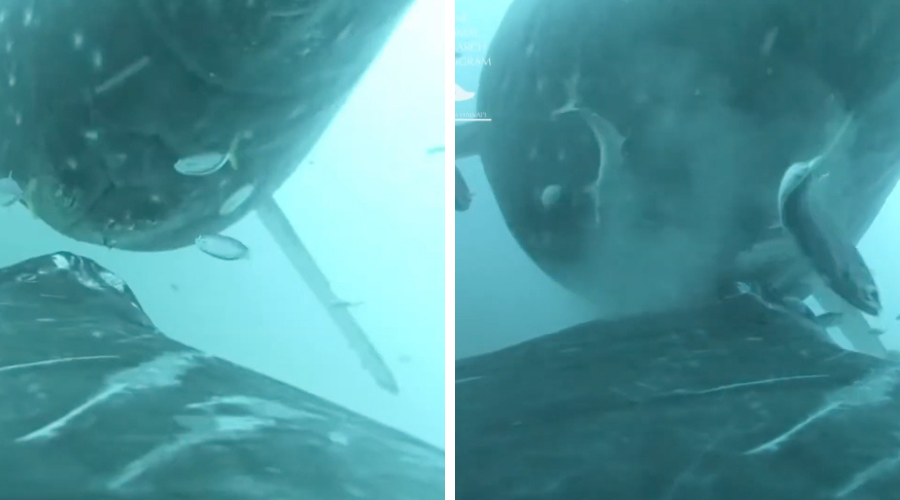
During the first 6 months to 2 years, the mother will feed her young milk to nourish the baby and provide it with nutrients. This feeding will go on until the child can hunt for food and survive independently. In some cases, a child may continue to suckle on the mother’s nipple after they’ve started consuming solid foods and even after the mother stops lactating.
In addition to feeding their young with milk, mothers often develop very close relationships with their children. Depending on the species, these relationships may last anywhere from a few years to a lifetime. In some tightly knit pods or groups, females other than the mother may also care for the mother’s child by protecting the child and, in some cases, even feeding it. However, this depends largely on the species and the pod. Within a family group, the male whales are referred to as bulls, females are called cows, and newborns are known as calves.

The importance of milk for healthy growth
As with other animal species (including humans), milk serves an important part in the healthy growth of infant whales and young children. For baby whales, milk provides high quantities of healthy fats/fatty acids and nutrients that help the child grow, assist with bone development, improve the immune system, and ensure that the child gets the minerals and vitamins it needs for proper physical and brain functioning. In fact, baby whales may survive solely on milk at the beginning of their birth. Without milk, these newborns may starve or become malnourished as they no longer receive nutrients from their umbilical cord, which becomes severed at birth.
As mentioned earlier, baby whales can consume a huge quantity of milk daily, and this milk provides the food they need during the first several weeks to several months of their existence on earth. Aside from feeding the child, suckling milk can also be thought of as a bonding experience between a mother and her child.

It has been proven over and over that early nourishment and care between a child and parents is essential for proper emotional development and learning basic communication skills.
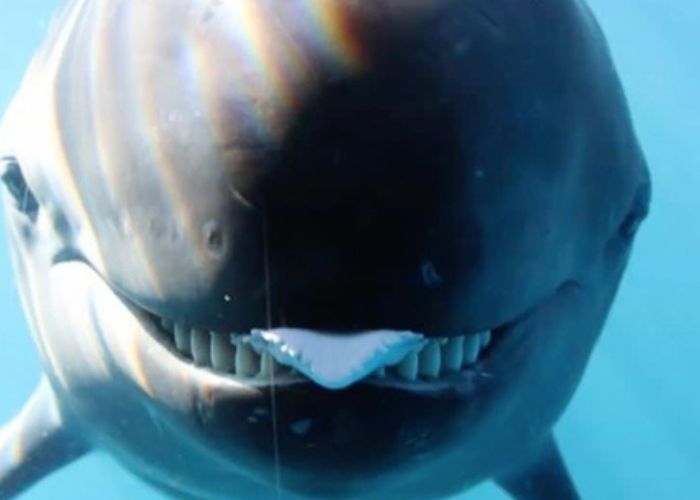
Baby cetaceans’ tongues have frills, as you can see here in the picture of a false killer whale tongue. Those frills help them as a sort of seal that allows them to nurse underwater without drinking the saltwater. Pretty cool.
Smaller marine mammals, such as killer whales and other dolphins that have been fed milk from a container (often in captivity) tend to have much shorter and highly stressed lives.
In fact, some estimates state that a killer whale’s lifespan may be reduced by over 50% when held in captivity. This is partly due to living in a confined area and being isolated from other animals, but it may also be due to their diet, such as consuming frozen fish and not suckling from their mother.
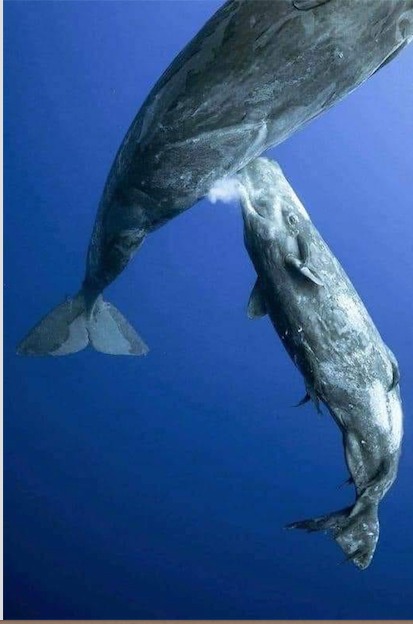
As you can see, milk plays an essential part in early child development in providing nutrients and developing a social/emotional bond with its mother. Even when given the utmost care and compassion, marine mammals (such as dolphins) held in captivity tend to fare less well in lifespan than those that live in the wild. On the other hand, temporary captivity may be vital to assisting marine mammals in recovering from serious injuries where their chances of surviving in the wild seem fairly low, and additional care is required for their development.
 Fun Fact:
- A group of whales is commonly referred to as a pod.
- A pod usually consists of whales bonded together for biological reasons (i.e., a mother bearing offspring and raising her child).