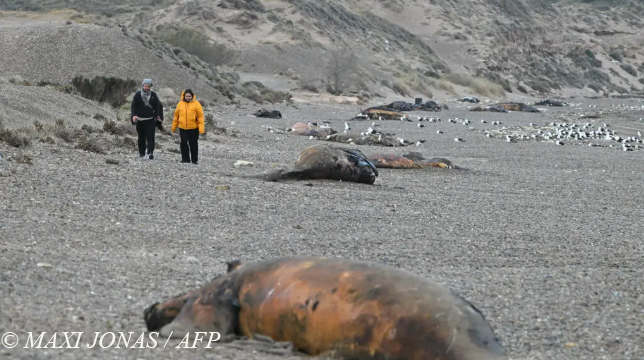
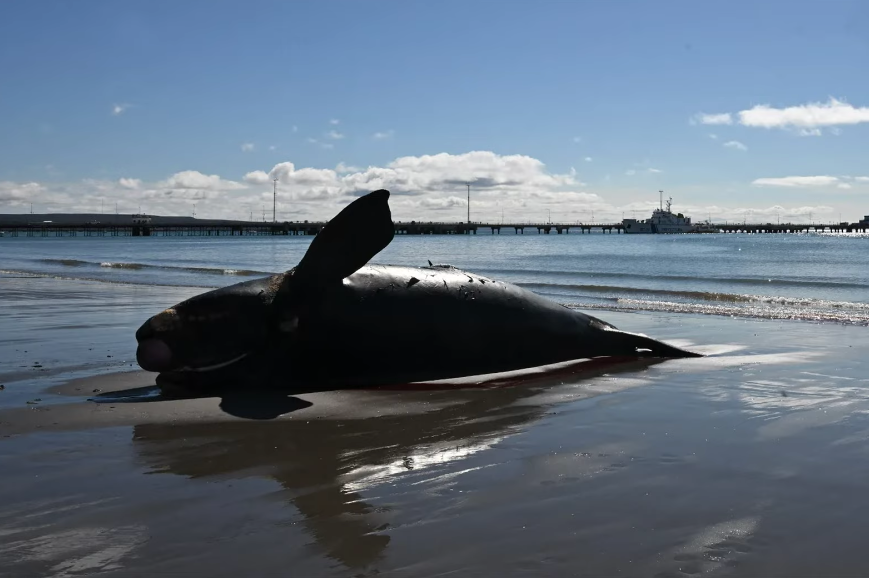
What caused hundreds of baby southern right whale calves to suddenly wash up dead on beaches along the stunning coast of Argentina’s Peninsula Valdez, being reported since June 2026, putting the provisional toll at 300? The number is preliminary, but the scale is extraordinary.
A heart-breaking scene is unfolding with this alarmingly high number of southern right whale calves washing ashore. Lifeless. Imagine a protected stretch of ocean, where southern right whale mothers return to give birth. Imagine scientists arriving on shore, again and again and finding dead calves.
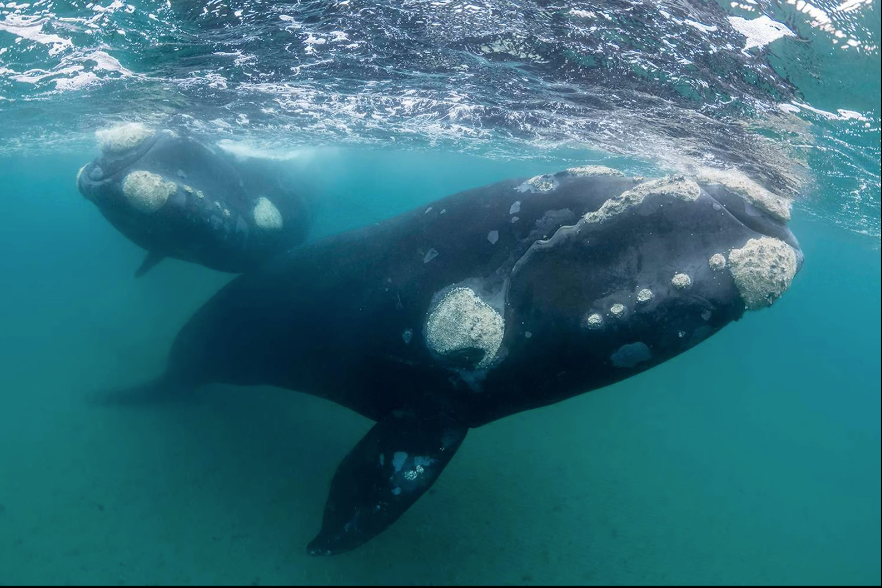
Some evidence that researchers are seeing in the animals includes some very characteristic square-like lesions on their skin and especially their backs, leading to the general hypothesis that a bacterium, called Erysipelothrix that exists naturally in the marine environment is most likely the cause of the deaths in these little cetaceans in Argentina as well as in other parts of the world. Researchers fear this could be the deadliest event ever recorded for these creatures.
This is not some remote area. Peninsula Valdez is one of the most important whale breeding grounds on Earth. Thousands of whales gather here every year to give birth.
Southern right whales were hunted to the brink of extinction during the 19th and 20th centuries. However, the population has rebounded since an international moratorium on commercial whaling was enacted in the 1980s. Today, an estimated 12,000 to 15,000 individuals live across the Southern Hemisphere.
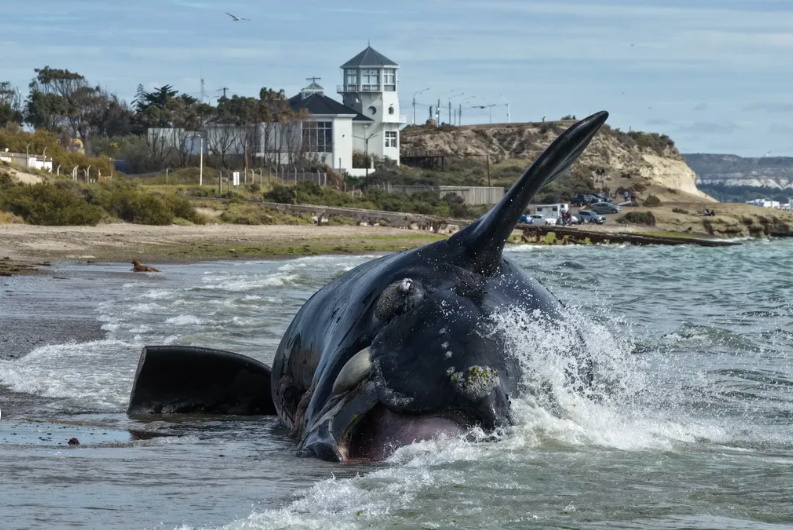
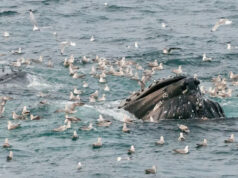
The scale of the losses left the scientific community deeply shaken, and the search for answers has led experts to a surprising suspect. Could common kelp gulls be the cause of this tragedy? But then gulls have pecked whales for decades, so what changed this year to kill so many calves? A past study looked into how killer attacks create open wounds on the calves. These lesions might act as doorways for dangerous bacteria to enter the body.
It is not yet proven that these bites are killing the whales, but experts believe the theory is worth revisiting.
But here’s the actual mystery.
E. rhusiopathiae was first detected in southern right whale calves in 2013. Scientists are still trying to understand what could have made it so deadly this year. One possibility is that the bacteria itself has evolved, leading to more severe infections. Or perhaps, changes in food availability are affecting the mothers’ body condition and, as a result, the health and resilience of their newborn calves. One possibility is that the bacteria itself has evolved, leading to more severe infections. Or perhaps, changes in food availability are affecting the mothers’ body condition and, as a result, the health and resilience of their newborn calves.
Something in the environment has shifted.
Is it possible that the cause might relate to anything that we as humans put into the environment or things we have done or contribute to, maybe without wanting to, of course?
The deaths might also be connected to changes to marine conditions, such as water temperature, salinity or pH, possibly caused by climate change or El Niño. These shifts might be creating “this perfect storm where this bacterium is powerful enough to weaken the calves’ immune system, making them more vulnerable.
Scientists are holding off on releasing the final tally until after the season ends. But preliminary figures suggest more than 300 southern right whale calves have died since June, roughly three times the previous record of 113 deaths set in 2012.
So, the mystery is not simply what organism they found. It is why so many calves die in this place, this year. The gull hypothesis and decades of monitoring are questions scientists still cannot answer. Right now, hundreds of baby whales are still washing up dead on a beach in Argentina, and scientists still don’t fully understand why
SOURCES:
Argentina’s Center for the Study of Marine Systems