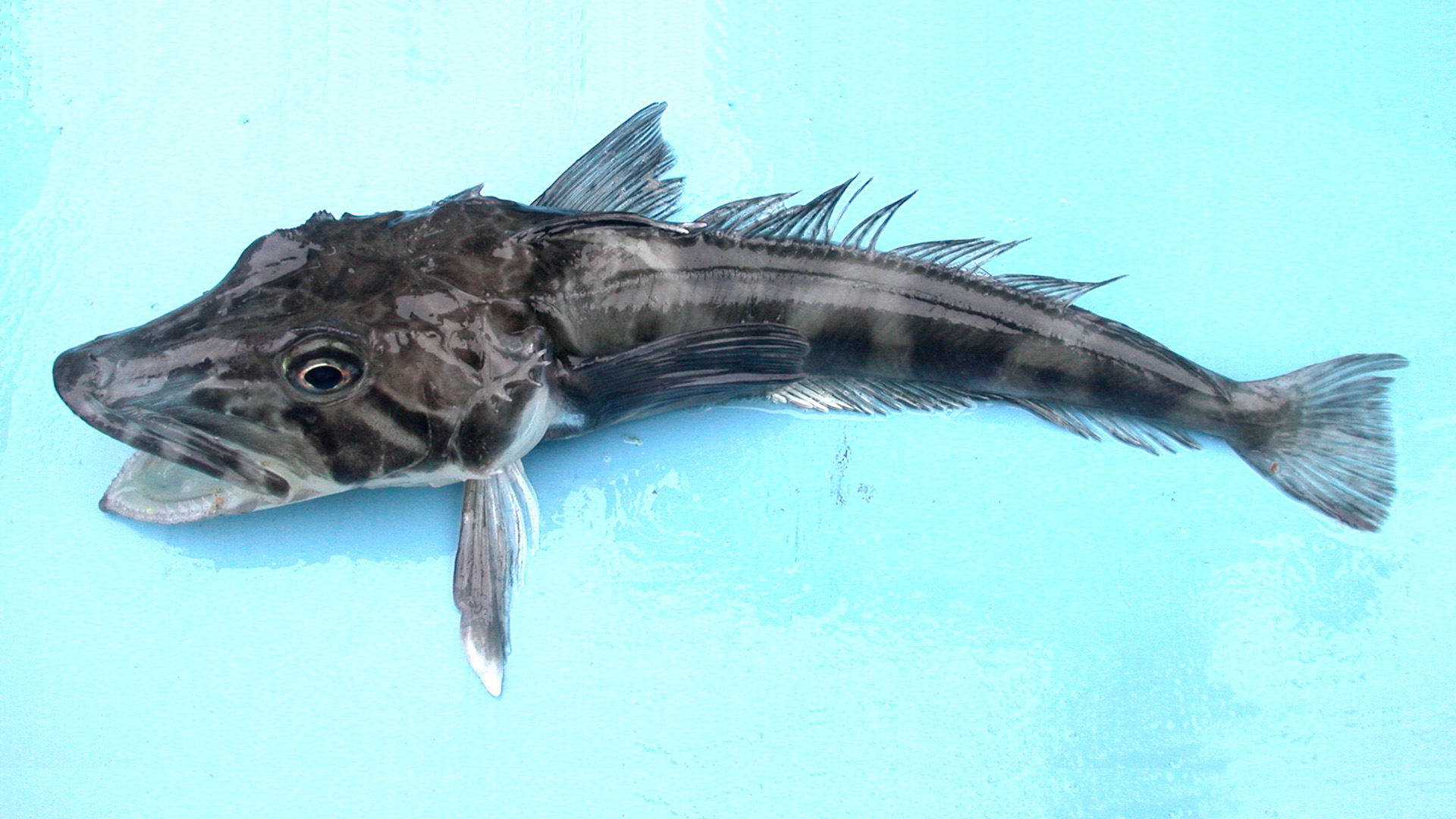
As Arctic waters got colder, cod evolved the ability to make antifreeze.
(Peter Leopold)
Did you know there are fish whose bodies contain antifreeze, like the stuff that keeps a car’s cooling water from freezing?
Many kinds of cod-ice fishes, which live near the South Pole, make a kind of antifreeze so that the icy water doesn’t kill them. Here’s how it works.
Water turns into ice at what’s called the freezing point, and if you’re in water at that point for more than a few minutes, ice crystals will begin to form in your flesh and innards, and then destroy your body cells. This happens to most fish and other animals, too. But the cod-ice fish’s antifreeze particles attach to ice crystals and make it hard for the crystals to grow.
Now, this is a pretty nifty trick, and some crafty humans have figured out that this cod-ice fish antifreeze could be useful to us, too. So the stuff is now being used to help improve the quality of frozen foods, and protect blood cells, transplant organs, and other tissues that are frozen for later medical use.
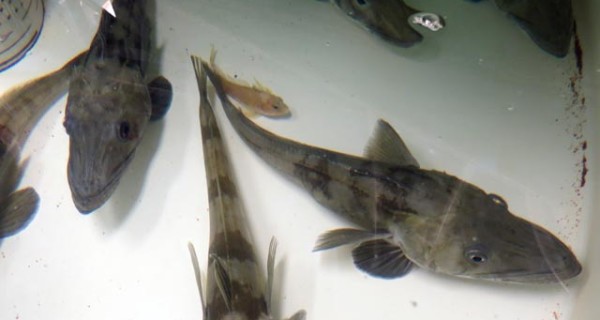
It has taken her two decades, but Chi-Hing Christina Cheng has finally solved her ultimate cold case—a fishy mystery that extends from one frigid end of the planet to the other.
Cheng, a Chinese-born biologist, moved to the United States as a teenager and began working in Antarctica in 1984. There, she and her partner, Arthur DeVries, studied the notothens—a group of fish that swim in the continent’s subzero waters. These animals survive at temperatures that would kill other fish because they produce their own antifreeze—a protein that courses through their blood and prevents ice from forming.
The protein is incredibly simple. It comprises the same three chemical building blocks, repeated over and over—one threonine and two alanines. This repetitive unit, which I’ll call “thralala” for convenience, is perfectly shaped to stick to ice crystals, creating a barrier that stops water molecules from joining and prevents the crystals from growing.
Here’s another weird thing about one group of these critters:
They’re the only known vertebrates—animals with backbones—that lack haemoglobin. Haemoglobin is the stuff in blood that carries oxygen to all the cells. But because icy Antarctic waters are loaded with so much oxygen, these cod-ice fishes can absorb all the oxygen they need directly through their skin. And with no haemoglobin, which is what makes blood bright red, these fish have completely transparent blood! The clear-blooded ice fishes aren’t fished for food, but a cousin, the Chilean sea bass, is popular. . . and delicious!